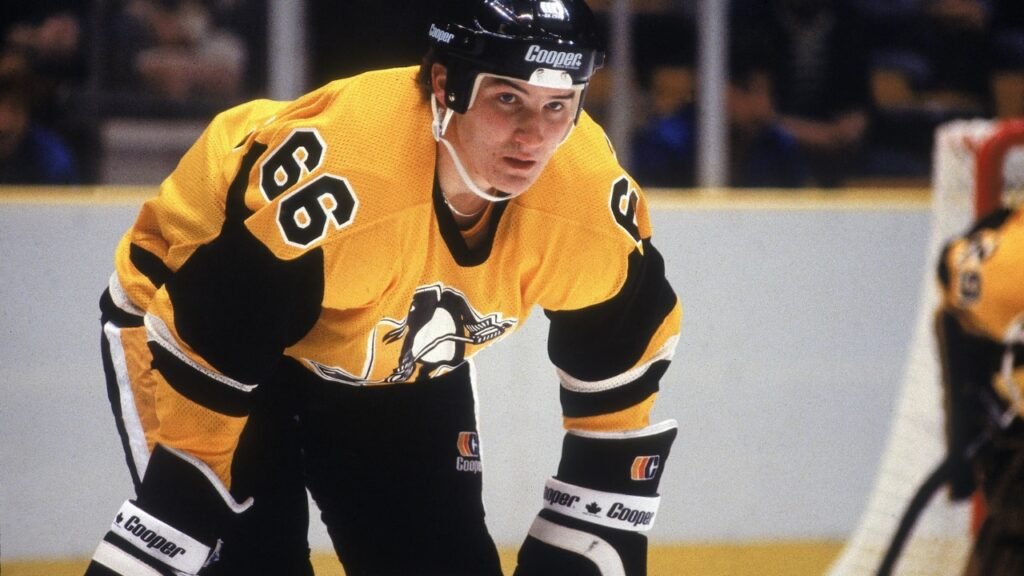
Hello, hockey fans! If you love following the NHL and admire world-class, Mario Lemieux is a name you’ll recognize instantly. Mario Lemieux, known as Super Mario or Le Magnifique, is one of the all-time NHL greats who lit up the ice for the Pittsburgh Penguins and saved the franchise off it too. Even in 2026, at age 60, his legacy as player, owner, and hockey icon keeps growing with the Penguins’ ongoing success. Let’s dive into the details on this legend.
Mario Lemieux’s Biography
| Category | Information |
| Full Name | Joseph Roger Mario Lemieux |
| Nickname | Super Mario, Le Magnifique |
| Date of Birth | October 5, 1965 |
| Current Age | 60 years old |
| Education | Laval Voisins (Junior Hockey League) – Dropped out at age 16 |
| Nationality | Canadian |
| Height | 6’4″ (1.93 meters) |
| Turned Professional | 1984 |
| Net Worth | $300 million |
| Playing Career Salary (Estimated) | $58.5 million |
| Spouse | Nathalie Asselin |
| Marriage Date | June 26, 1993 |
| Relationship Status | Married |
| Instagram Profile | @mariolemieuxfdn |
Early Career
Mario Lemieux kicked off in the QMJHL with the Laval Voisins. As a 15-year-old draftee, he boldly promised to shatter records. In 1983-84, he exploded for 282 points (133 goals, 149 assists) in 70 games, breaking Guy Lafleur’s goal mark with six in one game. Playoffs added 52 points in 14 games, landing Laval at the Memorial Cup. Over three junior seasons, he tallied 562 points in 200 games, proving he was NHL-bound at 18. (68 words)
Professional Career
Lemieux entered the NHL as the Penguins’ top pick in 1984 amid drama—he skipped the handshake over contract talks, but signed for $600K plus bonus. Debut night, he swiped the puck from Ray Bourque and scored on his first shot against Boston. Rookie year: 100 points despite missing games, Calder Trophy, and All-Star MVP—first ever for a rookie.
The Penguins struggled financially and on ice, but Mario kept piling stats. Second season, 141 points, second to Gretzky. Canada Cup 1987 with Gretzky and Messier sharpened him; next year, 168 points, first Art Ross, Hart Trophy. 1988-89: 199 points, only guy to near Gretzky’s 200+ mark, plus eight-point game with goals in every situation—unique feat.
Injuries hit: back issues, herniated disc surgery in 1990. Missed 50 games but returned to lead Penguins to first Cup in 1991 with 44 playoff points (Conn Smythe). Repeated in 1992 despite more absences. 1993: Hodgkin’s lymphoma diagnosis mid-hot streak (on pace for Gretzky records), but radiation didn’t slow him—160 points in 60 games, another Art Ross, Hart, Masterton.
More back surgeries, full 1994-95 miss. Came back 1995-96: 161 points leading league. Retired 1997 after Hall of Fame waiver induction (third ever to play post-induction). Bought bankrupt Penguins in 1999, converting $20M owed salary to ownership with Ron Burkle for $107M total.
2000 comeback at 35: 76 points in 43 games, top points-per-game. Mentored stars like Crosby, played till 2006 retirement from heart issues. As owner, Penguins won Cups in 2009, 2016, 2017—first player-owner double champ. Career: 915 GP, 690G-1033A-1723P (1.88 PPG, second all-time), despite missing 500+ games to health woes. Sold majority to Fenway 2021 for $900M valuation but kept stake, chairman role. (248 words)
Wife
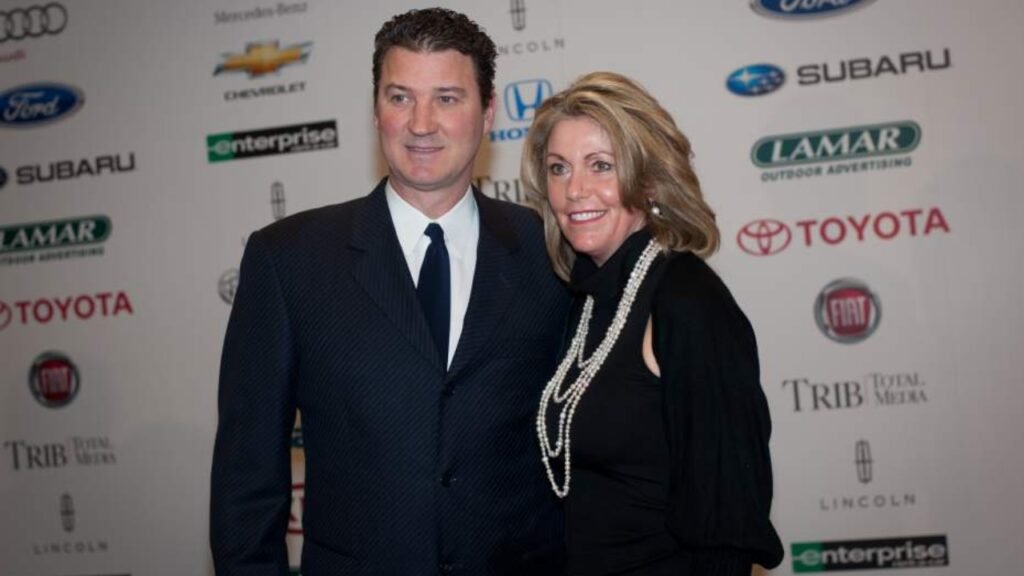
Lemieux is happily married to Nathalie Asselin since June 26, 1993. They have four kids: Lauren (1993), Stephanie (1995), Austin Nicholas (1996, premature but now healthy, played college hockey at Arizona State), and Alexa (1997). Family time in Sewickley keeps him grounded post-career.
Mario Lemieux’s Net Worth Details
As of 2026, Mario Lemieux’s net worth sits at $300 million. Most comes from Penguins ownership gains: bought controlling stake 1999 amid bankruptcy, team value soared to $900M sale in 2021 (retained minority ~2.5%), with recent buzz of him eyeing bigger role after 2025 ownership shift to Hoffmann Family for ~$1.7B. Career NHL pay totaled $58.5M, boosted by big contracts like 1992’s six-year $42M deal.
Prize Money
| Achievement/Season | Amount/Description | Year(s) |
| Three-Year Initial Contract | $725,000 | 1984 |
| Signing Bonus | $150,000 | 1984 |
| Four-Year Contract Extension | $3,500,000 | 1986 |
| Five-Year Contract | $10,000,000 | 1989 |
| Seven-Year Contract (Record) | $42,000,000 | 1991-1992 |
| Annual Salary Peak | $6,000,000 | 1992-1997 |
| Nike Endorsement Deal (Annual) | $500,000 | 2000-Career Spanning |
| 2000-01 Season Salary | $1,410,000 | 2000-2001 |
| 2001-02 Season Salary | $5,250,000 | 2001-2002 |
| 2002-03 Season Salary | $5,250,000 | 2002-2003 |
| 2003-04 Season Salary | $5,250,000 | 2003-2004 |
| 2005-06 Final Season | $3,000,000 | 2005-2006 |
| Total Career Salary Earnings | $58,500,000 | 1984-2006 |
| Estimated Endorsement Earnings | ~$100,000,000 | Throughout Career |
| Penguins Sale Proceeds | $200-300,000,000 | 2021 (Pre-Tax) |
| Estimated Current Net Worth | $300,000,000 | 2026 |
Endorsements
- Nike – Signed a $500,000 per-season deal in 2000 to wear Nike equipment and endorse their hockey products, footwear, and golf equipment; helped launch innovative new skates and donated game-worn equipment to charity
- Coca-Cola – Appeared in major advertising campaigns and became the face of Coca-Cola’s sports marketing initiatives, leveraging his global appeal to hockey and sports fans worldwide
- Gatorade – Partnered with the sports drink brand to promote their performance beverage line, adding credibility through his endorsement as a professional athlete
- Reebok – Lent his name and image to Reebok’s athletic apparel and merchandise lines, helping promote their hockey gear and sportswear collections
- Koho/Bauer – Early career equipment partnerships where he used their sticks, gloves, and hockey equipment; later transitioned to other manufacturers as his career evolved
- Campbell’s Chunky – Appeared in television commercials promoting Campbell’s condensed soups and convenience foods
- ESPN – Secured endorsement deals with sports media giant ESPN for various promotional activities and appearances
- Lemieux Credit Card and Merchandise Licensing – Participated in merchandise licensing programs and credit card initiatives designed to capitalize on his name and image for various consumer products
Career Records
| Category | Record/Achievement | Notable Detail |
| Regular Season Games | 915 games played | Entire career with Pittsburgh Penguins |
| Career Goals | 690 goals | 2nd among QMJHL alumni |
| Career Assists | 1,033 assists | Highest among QMJHL alumni |
| Career Points | 1,723 points | 2.93 points per game average |
| Goals Per Game | 0.75 avg | Higher than Wayne Gretzky (0.6) |
| Points Per Game | 1.88 avg | Only slightly below Gretzky’s 1.92 |
| Playoff Goals | 76 goals | 107 playoff games |
| Playoff Points | 172 points | 1.61 points per game in playoffs |
| Hat Tricks | First career in 1985 | vs. St. Louis Blues, 8-4 victory |
| Single-Season Record | 199 points (1988-89) | 5th most in NHL history |
| Consecutive Games Scoring Streak | 61 games (Junior) | QMJHL record |
| Five-Goal Game | December 1988 | Rare feat accomplished |
| Rookie Points | 100 points | In 73 games, 1984-85 |
| Art Ross Trophy Wins | 6 titles | 1988, 1989, 1992, 1993, 1996, 1997 |
| Hart Trophy MVPs | 3 awards | 1988, 1993, 1996 |
FAQs
1. Did Mario Lemieux ever win the Stanley Cup, and how many times?
Mario won the Stanley Cup twice as a player—in 1991 and 1992 with the Pittsburgh Penguins, earning the Conn Smythe Trophy (playoff MVP) both years. He later won three additional Stanley Cups as the team’s owner in 2009, 2016, and 2017, making him the only person to have won the trophy as both a player and owner.
2. What was Mario Lemieux’s biggest health challenge, and how did he overcome it?
In January 1993, during his prime at age 27, Lemieux was diagnosed with Hodgkin’s lymphoma. He underwent 22 rounds of radiation therapy, completing treatment on March 2, 1993. Remarkably, he returned to play that same evening, flying from Pittsburgh to Philadelphia to take on the Flyers. He continued the 1992-93 season and won the Art Ross Trophy despite missing significant time, demonstrating extraordinary physical and mental resilience. He missed the entire 1994-95 season recovering from both cancer treatment effects and back injuries, but returned in 1995-96 to lead the league in scoring again.
3. How does Mario Lemieux’s points-per-game average compare to Wayne Gretzky’s?
Lemieux averaged 1.88 points per game over his 915-game career, while Gretzky averaged 1.92 in 1,487 games. More impressively, Lemieux scored 0.75 goals per game compared to Gretzky’s 0.6, suggesting he may have been a more efficient goal scorer. Many experts believe Lemieux would have broken several of Gretzky’s records had he remained healthy, as even Gretzky himself has suggested.
4. What is the Mario Lemieux Foundation, and what does it do?
Established in 1993 following his cancer diagnosis, the Mario Lemieux Foundation is a 501(c)(3) nonprofit dedicated to cancer research, patient care, and supporting individuals battling the disease. The foundation has become a significant charitable force in Pittsburgh and beyond, funding medical research projects and providing direct support to cancer patients and families. Recent ventures include collaboration with luxury hat brand GoorinBros on exclusive merchandise, with proceeds benefiting the foundation.
5. How much is Mario Lemieux worth today in 2026?
Mario Lemieux’s estimated net worth is approximately $300 million. While his playing career generated approximately $58.5 million in salary plus an estimated $100 million in endorsements, his primary wealth source came from ownership of the Pittsburgh Penguins. By converting deferred salary into equity in 1999 and building his ownership stake over 22 years, he profited an estimated $200-300 million when Fenway Sports Group purchased controlling interest in 2021.
6. Why did Mario Lemieux drop out of school, and did he regret it?
Lemieux left formal education after the tenth grade at age sixteen to focus entirely on junior hockey. He felt the commitment to excellence required full-time dedication. While he acknowledged that education remains important, he expressed no regrets about his decision, as it positioned him for NHL success. He later noted that he had considered returning to school if needed, but his hockey career made formal education unnecessary.
7. What was Mario Lemieux’s role as Pittsburgh Penguins owner?
Beginning in 1999, Lemieux transformed from player to majority owner, becoming the first former NHL player to own his previous team. He initially served as president, CEO, and chairman before relinquishing the first two positions. Under his ownership, he oversaw the construction of Consol Energy Center, negotiated a lease that kept the Penguins in Pittsburgh for 30 additional years, and won three Stanley Cups as owner (2009, 2016, 2017). As of 2025-2026, with new ownership changes, Lemieux continues as a minority owner and chairman.
8. Which of Mario Lemieux’s NHL records still stand today?
Lemieux’s most impressive records include his 1.88 career points-per-game average (second all-time behind Gretzky), his 199-point season in 1988-89, his six Art Ross Trophy wins (tied with Gordie Howe), and his three Hart Trophy MVPs. His 690 goals and 1,723 career points remain among the elite all-time marks. Additionally, his QMJHL junior record of 282 points in 70 games (1983-84) remains largely untouched in professional hockey.
9. How did Mario Lemieux manage his relationship with Jaromir Jagr while they were teammates?
Lemieux and Jagr had a complex relationship that evolved significantly. Initially, when Jagr joined in 1990 as a teenager, Lemieux mentored him like a younger brother, and their chemistry seemed effortless. However, as Jagr gained confidence and developed his own fanbase, the distance between them grew. When Lemieux returned from retirement in 2000, Jagr had become a franchise cornerstone himself, creating tension over team leadership. While they continued to produce excellent results together, their personal bond never fully recovered, with Lemieux’s silence about the situation speaking volumes about his disappointment.
10. What endorsement deals has Mario Lemieux secured, and are they still active?
Lemieux’s most notable endorsement deals include a career-spanning Nike deal (2000 onwards, worth ~$500,000 annually) and subsequent partnerships with CCM, Bauer Hockey, and KahuSports before his playing retirement. Post-retirement, he transitioned to real estate, becoming an AI-powered RE/MAX realtor with over $250 million in lifetime sales. He’s also recently collaborated with luxury hat brand GoorinBros on “Le Magnifique” merchandise benefiting his foundation. His foundation maintains a prominent Instagram presence, continuing his philanthropic visibility.